Lucid
2024-2025
Neskirkja, Vesturbær, Reykjavík, Iceland
"Let there be light."
And there was light.
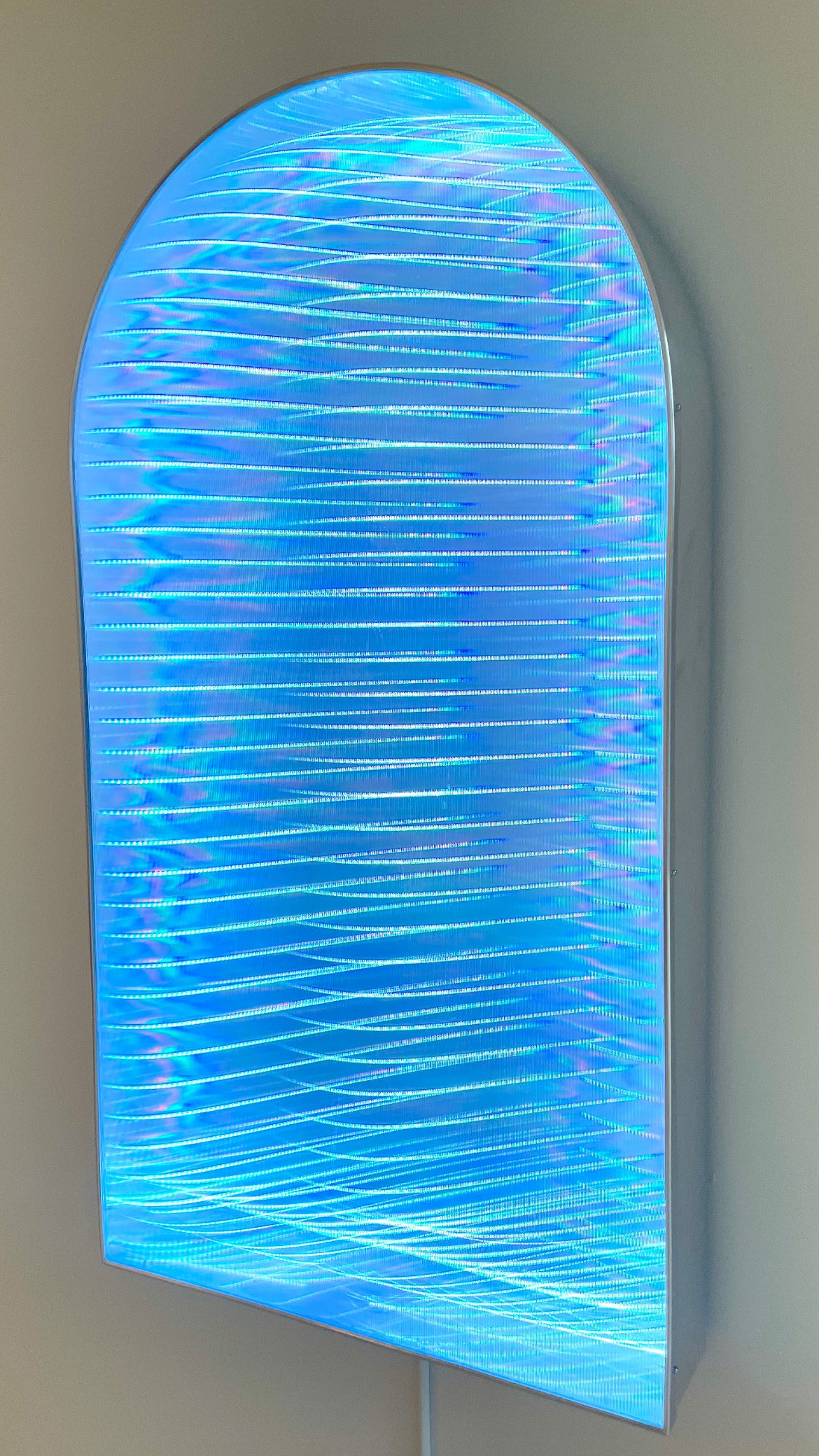
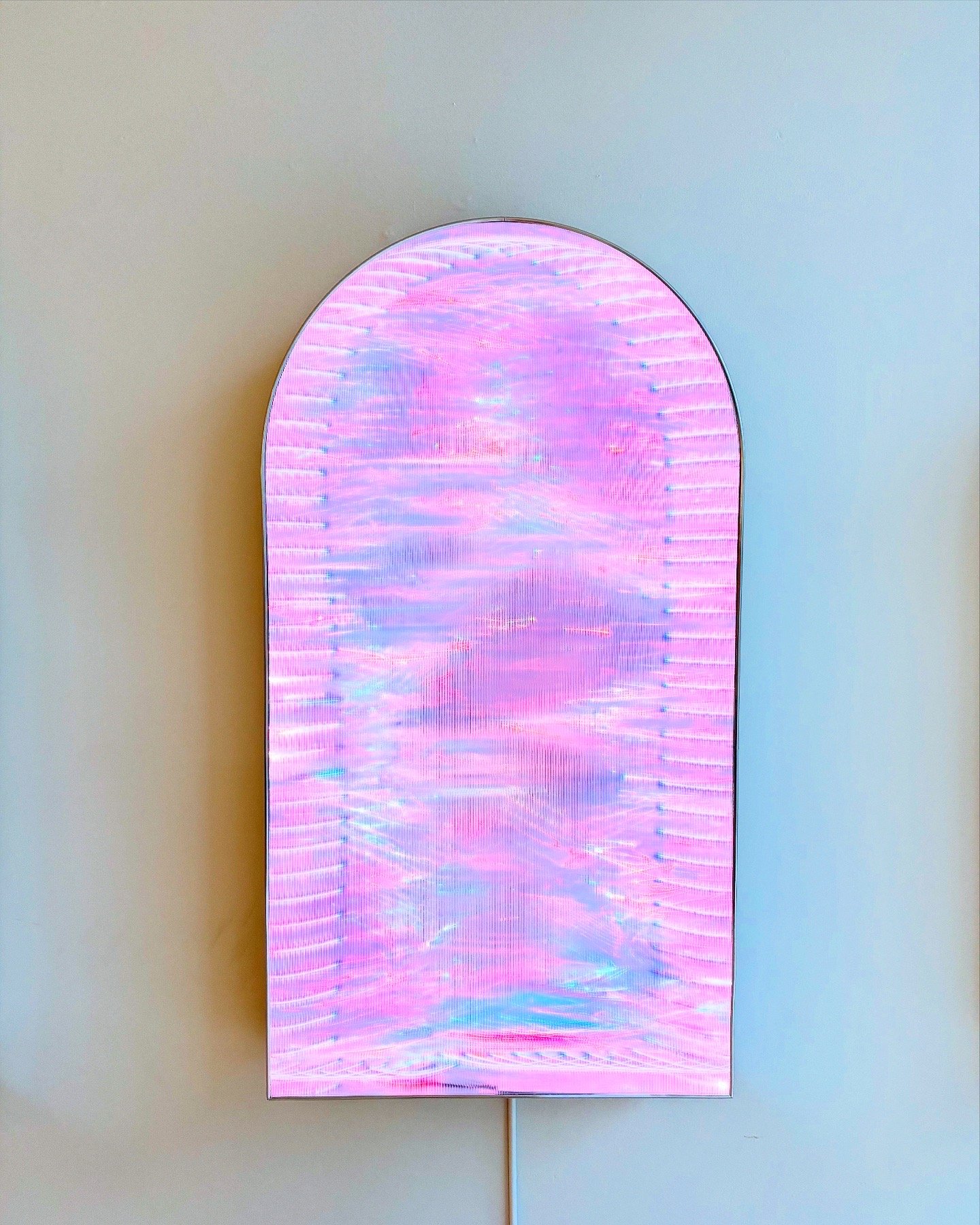
Lucid is a series of light-based works inspired by church windows, offering glimpses into the intangible and the unseen. Through optical illusion and material transformation, the works invite viewers to set aside what they think they know, look inward, and focus on light itself—its presence, its beauty, and its profound influence on our perception of the world.
At the very beginning of Genesis, God creates light. Light is the foundation of life on Earth, and throughout history humanity has continually sought it.
Light governs much of our existence. For millennia, sunlight has shaped our rhythms, energized our bodies, and regulated our sense of time. Today, artificial light increasingly influences our behavior and biological clock. It could be argued that what we truly long for is daylight—the light that comes from the sky—because of its deep effect on our inner lives. Yet the second most influential light source in our lives may be the blue glow emitted from countless screens, activated by an endless stream of information transmitted through satellites orbiting above us.
We pray to the sky.
But what is in the sky?
A celestial body and a satellite.
The works borrow the classical form of church windows, rising into a pointed arch that references the Holy Trinity. Looking through them, one may wonder whether one is looking inward or outward. But does that distinction matter?
You are looking at the light itself.
The works are abstract; in many ways, they are paintings made of light. By combining reflective, transparent, and light-sensitive materials, I distort the viewer's perception, allowing the works to shift continuously according to changing conditions of light, weather, and location.
It is difficult to grasp exactly what one is seeing. The eye recognizes the image, yet the mind struggles to define it.
As Skúli, the parish priest, writes:
"Windows are remarkable phenomena. They establish a threshold between interior space and the surrounding world, while remaining constantly before our eyes. How many waking hours do we spend looking at a screen? Research shows that this thin, transparent surface profoundly influences how we interact with one another—in traffic, online communication, and everyday life. It is as though the window creates distance, making communication more impersonal and increasing the likelihood of behavior we might never display in a face-to-face encounter.
In the artist's treatment of the window, I see an attempt to examine the fact that our reality is mediated through the senses. As she writes, the works engage with ‘a visual illusion that encourages the viewer to part with what they know, look inward, and focus on the light itself and the beauty within it.’”